
Control Rests with Developers in DLSS 5, AMD Keeps the Pressure On
NVIDIA has clarified that DLSS 5 is not a single AI filter but a developer-managed enhancement layer, while AMD is making a stronger AI infrastructure push with Helios.
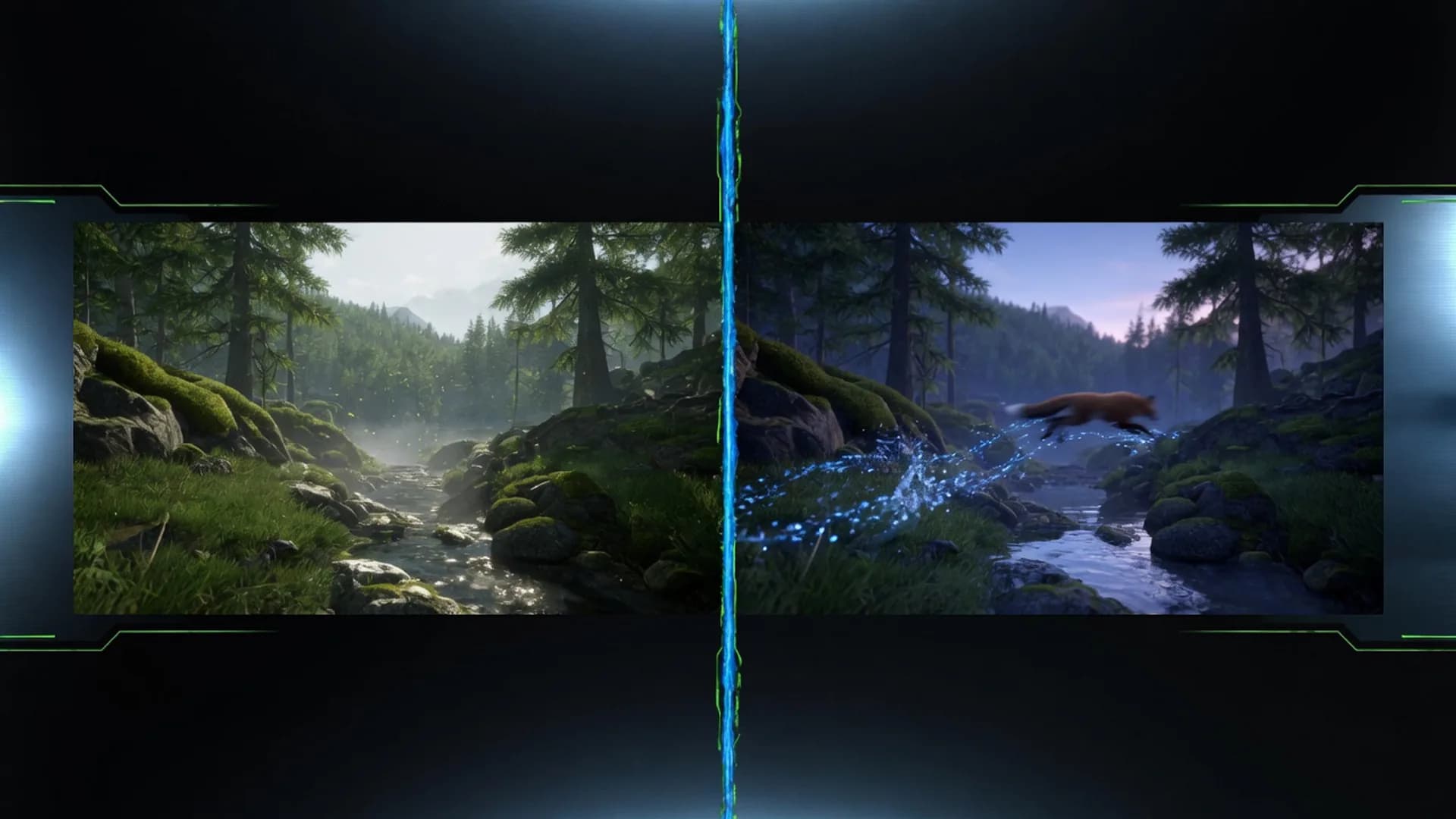
NVIDIA has finally clarified the long-debated point around DLSS 5: the system does not behave like a single, monolithic AI filter, but instead works as an enhancement layer managed by the developer. That distinction directly affects how the image is shaped on the player side and which details are preserved on the studio side. At the same time, AMD is making a more aggressive move in AI infrastructure with its Helios system. As CUDA talk fades into the background, the center of gravity in the rivalry is shifting a little.
How does DLSS 5 take shape in the developer’s hands?
Shown at SIGGRAPH 2026, DLSS 5 was explained in a more technical framework following reactions to its earlier reveal. NVIDIA confirmed that the system contains three different models. Displayed as Model A, Model B, and Model C, these structures can process the same scene in different ways. The developer can also choose which model is used in which scene.
The key difference here is that DLSS 5 does not rebuild the image from scratch. The game engine continues to generate geometry, the camera, lighting, and composition. DLSS 5 then processes that frame afterward, enhancing materials, shadows, reflections, and other details. In other words, the base scene is preserved, and an additional layer is applied on top.
Another point emphasized by NVIDIA was the preservation of artistic intent. The system can handle every character, object, and game setting in the scene separately, exactly as the developer wants. This is meant to prevent facial features, clothing details, or scene identity from changing randomly. The approach is a direct response to one of the biggest criticisms of AI-based image generation.

What do single-GPU support and the two main settings mean?
One of DLSS 5’s standout technical points is that the system is designed to run on a single GPU. NVIDIA says this will be efficient in terms of performance and VRAM usage. The target of processing 8.3 million pixels at 4K resolution above 60 FPS also sits within that framework. Detailed system requirements have not yet been shared, but the message at the reveal was clear: the goal is to do this without disrupting the game flow.
Sources
- https://www.pcgamer.com/hardware/amd-calls-cuda-a-non-event-says-companies-are-programming-at-levels-where-the-nvidia-tech-doesnt-really-matter/
- https://www.techpowerup.com/350916/nvidia-shows-dlss-5-progress-and-technical-details-at-siggraph-2026
- https://zamin.uz/en/technology/214118-amd-introduces-helios-system-to-challenge-nvidia-dominance.html
- https://videocardz.com/newz/nvidia-details-dlss-5-three-models-per-object-controls-and-single-gpu-support
- https://www.pcgamer.com/hardware/nvidia-finally-reveals-what-controls-devs-actually-have-for-dlss-5-and-dont-worry-folks-there-are-two-main-sliders-to-control-the-ai-filter/
- https://twistedvoxel.com/nvidia-confirms-dlss5-is-ai-filter-developers-can-control/