
Mobile Game Revenue and Downloads Are Moving in Different Directions
2026 data shows the mobile gaming market is no longer growing in one piece: downloads are falling while revenue is being sustained by higher spending from existing users.
The 2026 data makes it clear that the mobile gaming market is no longer telling a single, unified growth story. While the player base is expanding, downloads are declining, and revenue is not standing still; on the contrary, it is being sustained largely by extracting more spending from existing users.
This picture shows that in today’s market, retaining current players and increasing spend are just as decisive as acquiring new ones. As pressure rises on the in-app purchase side, ads and live service models are also becoming an important part of the revenue balance.
Revenue is up, downloads are down
The most striking split in the new data is that mobile game revenue is no longer moving in step with download numbers. On one side, mobile in-app purchases are expected to surpass $107 billion in 2026. On the other, mobile game downloads fell by 7.2% in 2025, yet total IAP revenue still hit a record $82 billion.
That divergence was also clear in August figures. Mobile games generated $6.57 billion in global revenue that month, but total consumer spending was down 1% from the previous month. Over the same period, downloads increased by 1% to 3.76 billion. In other words, even as more people entered the store, the money flow came more from the existing player base.
July data told a similar story. Global mobile game spending rose to $6.6 billion, marking an increase of around 8% month over month. However, that growth was not driven by a wave of new hits, but by content cycles from long-established big brands that keep player spending alive.
3.1 billion players, fewer new installs
This is where the market’s biggest contradiction appears. Mobile games reached 3.10 billion players in 2026. That figure represents 83.9% of gamers across all devices. At the same time, mobile gaming’s share of the global games market has climbed to 56.6%.
But the download side does not reflect the same picture. In the first half of 2026, global mobile game downloads fell 25% year over year. That shows the market is struggling to attract new users, while revenue is being driven by getting more value from the existing player base. In short, the volume may look like it is growing, but the nature of that growth is changing.
Different regions of the market support this picture as well. Roughly 80% of net mobile audience growth in 2026 is concentrated in Central and South Asia, Southeast Asia, the Middle East, and Africa. Sub-Saharan Africa is the fastest-growing region, while growth in China has dropped below 1%, and Japan has become one of the markets seeing a net decline.
This also helps explain why monetization pressure is rising. A significant share of new players is coming from lower-income or more device-constrained markets. That makes it harder to apply high-priced purchase packages uniformly everywhere.
Why monetization pressure is rising
The real story on the revenue side is the effort to extract more spending per player. In 2026, a meaningful share of mobile game revenue depends on a relatively small group of high spenders. In some live service games, only 0.15% to 2% of players generate 50% to 70% of total revenue. That is why the high-spending audience known as “whales” has become central to the market.
On the in-app purchase side, cosmetic items, premium currency packs, and battle passes are leading the way. While cosmetics are becoming more important to game economies, pay-to-win structures have not disappeared entirely. The pressure is especially visible in gacha systems and high-turnover live service designs.
August data made that even clearer. Honor of Kings once again topped the global revenue chart. Roblox, meanwhile, led the downloads list. Revenue leaders are built on long-established monetization systems, while download leaders stand out thanks to accessible, free-to-play structures open to broad audiences. In the same month, games such as Gossip Harbor, Whiteout Survival, Royal Match, and Candy Crush Saga also drew attention for their long-running live service systems.
In 2026, growth and saturation are happening at the same time
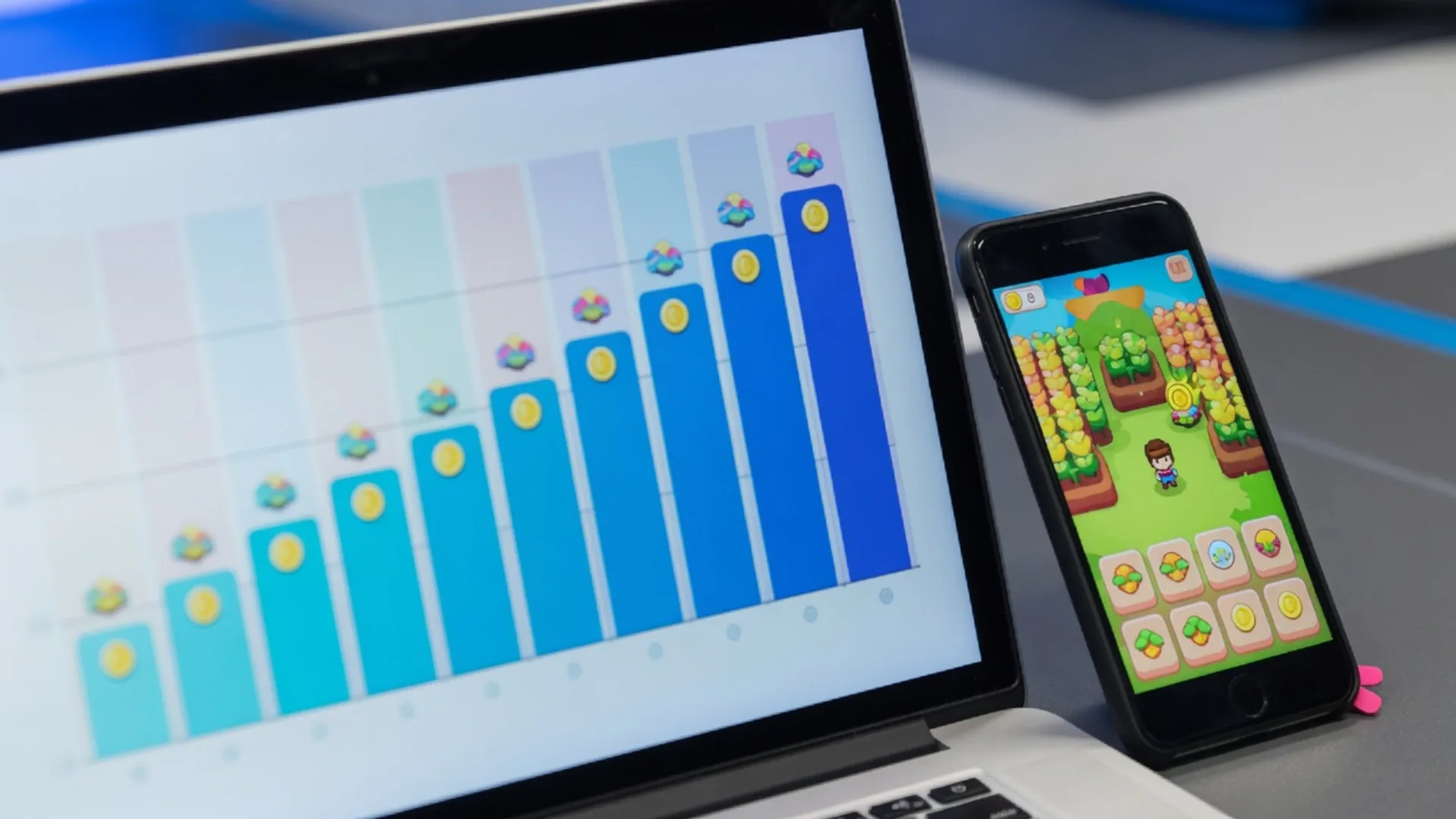
What the data says overall is this: the mobile gaming market is not shrinking, but it is no longer growing at its old pace. Growth is now being read more through revenue optimization. As download volume weakens, the player count continues to rise, pushing publishers toward tighter monetization systems.
This trend was visible in the major titles released throughout the year as well. Some new launches did not make it into the global top-grossing rankings. By contrast, established games kept player spending active through seasonal events, anniversary campaigns, cosmetic series, and limited-time rewards. The picture did not change in either August or July.
Mobile gaming is no longer just a race to acquire users. It has also become an economy measured by how long you can keep the players you already have, and how much spending you can generate from them. The 2026 data shows that this is exactly where the market is diverging.
Sources
- https://gameinsiderpro.com/how-mobile-games-make-money-2026
- https://shattered.io/mobile-gaming-3-1-billion-players-downloads-fall-25-percent-2026
- https://www.gamerefinery.com/mobile-game-market-review-september-2026
- https://shattered.io/mobile-gaming-6-57-billion-roblox-downloads-2026
- https://www.pocketgamer.biz/mobile-game-iaps-down-7-as-no-new-releases-break-top-grossing-charts-this-year/
- https://sensortower.com/blog/top-10-worldwide-mobile-games-by-revenue-and-downloads-in-august-2026
- https://www.globalgamesforum.com/news-media/the-biggest-mobile-games-of-august-2026
- https://www.singular.net/blog/top-mobile-games/
- https://www.pocketgamer.biz/mobile-games-make-66bn-in-july-as-honor-of-kings-leads-player-spending/