
Why Wordle, Pips, and the Daily Puzzle Ecosystem Are Still Going Strong
Wordle may have started the trend, but by 2026 the daily puzzle scene includes Connections, Strands, Quartiles, and NYT Pips—each keeping the routine fresh in its own way.
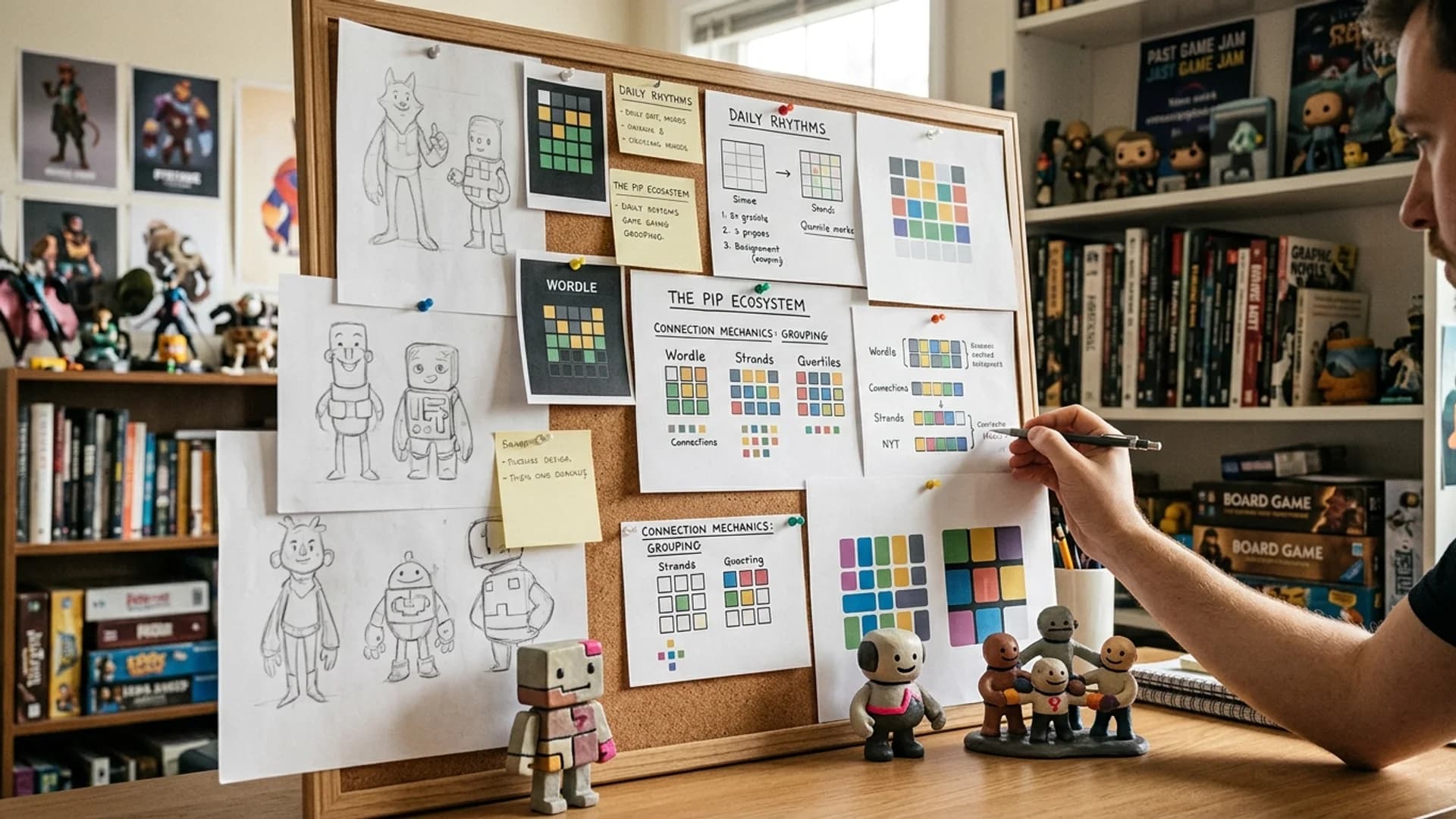
The daily puzzle and word-game format has grown into a habit far bigger than a single game. Wordle’s rise in 2021 and its acquisition by The New York Times in 2022 showed just how durable this audience could be. By 2026, the picture is no longer just about Wordle: games with different rules, like Connections, Strands, Quartiles, and NYT Pips, have all carved out a place in the same routine.
In this piece, we bring together the reasons the Wordle-like ecosystem is still alive and the alternatives that are standing out, all in one list drawn from three sources.
1) The routine Wordle created is still the benchmark
Wordle’s formula is simple: guess the five-letter word in six tries or fewer. After each attempt, it gives feedback with gray, yellow, and green blocks. That straightforward structure gives players a short but consistent daily goal. According to CNET, Wordle’s release in 2021 by Josh Wardle and its move to The New York Times in 2022 pushed the game to the center of daily puzzle culture.
The same source also reminds readers that once Wordle is done, there are other options for anyone looking for a similar experience. The key point here is that Wordle is still the reference point. Even as similar games multiply today, that daily “one puzzle, one solution” feeling remains the backbone of the ecosystem.
According to CNET, Wordle’s core rule set functions as a kind of measuring stick for other daily puzzles.
2) Connections turns wordplay into a group puzzle
One of the options highlighted by CNET is Connections. In this game, players must identify four groups of four words, with no more than four mistakes allowed. The difficulty is also color-coded: yellow is easiest, followed by green, blue, and purple.
This setup moves away from Wordle’s single-word solving loop. In Connections, the challenge is not finding the right letter, but finding the right relationship. CNET also notes that the game resembles the BBC quiz show Only Connect. In other words, the daily puzzle format here leans more on categorization and matching skills than on pure word guessing.
According to CNET, Connections stands out for players who want a more complex mental workout within the same daily routine.
3) Strands feels more like a word hunt than Wordle
Strands is another of The New York Times’ daily puzzles. But this time, the structure is closer to a word-search game than to Wordle or Connections. According to CNET, each day comes with a theme, and words can be hidden in the grid forward, backward, up and down, or in a zigzag pattern. Words can also move in an L-shape.
What makes Strands notable is that all the letters in the grid have to be used, which keeps players constantly wondering whether they’ve missed something. That turns the game from simple word finding into a mix of spatial scanning and pattern reading.
According to CNET, Strands keeps the daily puzzle habit intact while diverging sharply from Wordle in terms of mechanics.
4) Quartiles offers a shorter but denser word game
Also on CNET’s list is Quartiles, a word game available to Apple News Plus subscribers on iPhone or iPad. The source notes that it requires iOS 17.5 or later. The setup is different: players are given 20 letter tiles and must build words from them. The longest words are four tiles long, and these are called Quartiles.
The difference here is that instead of finding a single hidden word, you are building meaningful structures from given pieces. CNET says the game can be difficult, but finding a Quartiles is satisfying. That creates a more production-focused alternative within the daily puzzle ecosystem.
According to CNET, Quartiles takes the Wordle-like daily habit into a more fragmented and more intense word-building experience.
5) Dordle, Quordle, Octordle, and Sedecordle multiply the single-game idea
CNET’s list also highlights a separate group of Wordle variants: Dordle, Quordle, Octordle, and Sedecordle. What these games have in common is that they preserve the Wordle-like structure while asking you to solve more words at once. According to CNET, these games raise the difficulty by adding more rows, columns, and words.
The real idea here is not to change the pace of the daily puzzle, but to increase the pressure. Instead of Wordle’s single-target structure, you are given multiple solution spaces at the same time. That makes these variants a strong option for players who do not want to leave the classic Wordle experience behind, but do want more mental load.
According to CNET, this group expands Wordle’s core idea and pushes replayability to another level.
6) NYT Pips expands the daily puzzle format with domino logic
Pips opens a different path in the daily puzzle ecosystem by focusing on numbers and rules instead of words. According to Forbes, the game uses a grid made up of multicolored boxes, and each colored area represents a different condition. Players have a limited number of domino tiles and must both use every tile and satisfy each condition correctly. Difficulty levels are divided into Easy, Medium, and Difficult.
In Forbes’ May 12 piece, one interesting detail about that day’s Easy Pips is that not a single domino needed to be rotated; the writer adds that this would normally stretch the Easy tier to around 15 seconds. In the May 8 piece, the emphasis is on careful planning in certain colored areas, especially where specific numbers need to be kept separate. Taken together, the two pieces show that Pips is not just about solving, but about resource management.
According to Forbes, Pips adds a non-word but equally rhythmic logic to the daily puzzle ecosystem.
Conclusion: Why does the daily puzzle format still work?
Put these three sources side by side, and a clear picture emerges: the daily puzzle format survives not because of one single mechanic, but because it keeps branching out. Wordle offers a short, clean guessing loop. Connections focuses on relationships, Strands on word hunting, and Quartiles on building words from parts. Pips, meanwhile, carries the same daily rhythm into dominoes and condition management.
The common denominator is this: each game gives players a task that can be completed within a day. Because that task is short, regular, and shareable, the format keeps its strength. But with more options, the daily puzzle is no longer just one genre; it is an ecosystem of different games tied to the same habit.